Domestic Violence · October 28, 2026 · 11 min read
Criminal Protective Order
A judge has ordered you to stay away from someone the case names, and the paper is in your hand. It does not say which box counts, how many yards, or what you owe the court about your guns within 24 hours.
Criminal defense only. We do not file lawsuits or represent victims.
A criminal protective order is a court order made inside a criminal case, for example under Penal Code section 136.2, that bars a defendant from contacting, approaching or harassing a named alleged victim or witness while the case is pending. In a domestic violence case it is issued on Judicial Council form CR-160 (cases without domestic violence use CR-161), is handed to you in the courtroom, and takes effect at once. The protected person does not have to ask for it, and the protected person cannot cancel it.
This page is written for the person the order restrains. It walks through what the judge has to find, what each numbered item on the form actually forbids, the two firearm clocks that start the day the order is made, and what breaking it costs. The Law Office of Aaron P. McAllister defends people charged with crimes in Los Angeles, Orange and Riverside counties. It does not file lawsuits or represent victims.
This page explains California law as of September 30, 2026. It is general information, not legal advice, and it does not predict what any judge will order in a particular case.
Key Takeaways
- A criminal protective order comes from the criminal court, not from the person it protects. Section 136.2 lets a judge issue one on a good cause belief that harm to, or intimidation of, a victim or witness has occurred or is reasonably likely to occur.
- In a domestic violence case the court must consider issuing one on its own motion, and must consider a firearm prohibition even if it declines the rest.
- Firearms, firearm parts and ammunition must be turned in, sold or stored within 24 hours of receiving the order, with a receipt filed with the court within 48 hours.
- A willful and knowing violation of a section 136.2 order is contempt of court under Penal Code 166(c)(1)(A): a misdemeanor punishable by up to one year in county jail, a fine of up to $1,000, or both. It can also be prosecuted as witness intimidation under section 136.1 (section 136.2(b)).
- Consent from the protected person does not lift the order. Only another court order changes it.
What a criminal protective order is, and what it is not
The phrase sounds like the restraining order an ex-partner or a neighbor might file for, and the two are easy to mix up. They are different orders from different courts, and one does not cancel the other.
A criminal protective order is a condition of the criminal case. The statute that creates it puts the test in one sentence.
"Upon a good cause belief that harm to, or intimidation or dissuasion of, a victim or witness has occurred or is reasonably likely to occur, a court with jurisdiction over a criminal matter may issue orders."
California Penal Code section 136.2(a)(1), as amended by Stats. 2024, ch. 538 (AB 2907), effective January 1, 2025
Two features of that sentence matter to a defendant. First, the standard is a good cause belief, a much lower bar than the clear and convincing evidence a judge needs in a civil harassment case. Second, nobody has to file anything. Section 136.2(e)(1) says that when the charge involves domestic violence, or certain sex offenses, the court "shall consider issuing" the orders on its own motion, and that the court's file must be marked to alert the judge to the question. A minor who was physically present during an act of domestic violence counts as a witness who has suffered harm for this purpose (section 136.2(a)(2)).
The civil orders run on their own tracks. A domestic violence restraining order is requested by the other person in family court, and our guide for the person named in a restraining order explains how those work and how they can coexist with the criminal one. The criminal order is different in one respect that matters most: the alleged victim is a witness in your case, not the party who controls it.
What each item on form CR-160 forbids
The domestic violence version of the order is Judicial Council form CR-160, revised January 1, 2026. Read it as a list of separate prohibitions, because each numbered item is its own rule and some items only apply if the box beside them is checked. The California Courts form is the source for everything in this section: Criminal Protective Order, Domestic Violence (CR-160).
- Item 12, no dissuading. You may not try to prevent or dissuade any victim or witness from attending a hearing, testifying, or making a report to law enforcement.
- Item 13, no obtaining addresses. You may take no action to find out where the protected people or their family members, caretakers or guardians live or are, unless the judge finds good cause not to make this order.
- Item 14, no abuse. You may not harass, strike, threaten, follow, stalk, keep under surveillance, annoy by phone or electronic means, impersonate online, or block the movements of the protected people. The form defines "disturb the peace of" to reach text messages, online conduct and coercive control.
- Item 15, no contact. No contact of any kind, direct or indirect, by telephone, mail, email, electronic means or through a third party. Contact through an attorney, under reasonable restrictions set by the court, does not violate the order.
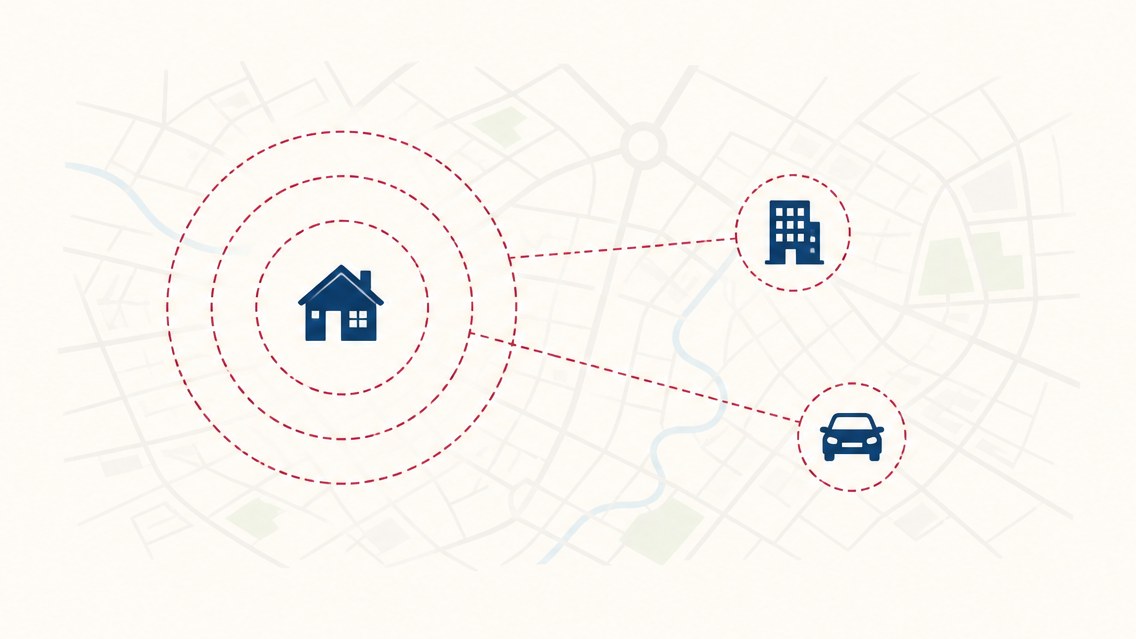
- Item 16, stay away. You must stay at least the number of yards written on the form away from the protected person, and from each place with a box checked: the person's home, job or workplace, or vehicle, and any other named location.
- Items 19 and 20. Where the county has authorized it, the judge may order electronic monitoring for a period not exceeding one year, and the form states that the protected person may record communications from someone who violated the order.
That last point about the checked boxes is the one that catches people. The yard number and the boxes are filled in by hand or by check mark at the hearing, and whatever is on the paper you leave with is the order. If item 16 has the home box checked and you live at that address, the order can require you to live somewhere else from that day. The form has one built-in exception for contact, in item 17: peaceful contact for the safe exchange of children and for visitation, but only as stated in a specific family, juvenile or probate court order, which the form says you should carry a certified copy of. The form does not create a general right to be at the shared home, to collect belongings, or to talk about the case.
Read the copy before you leave the courtroom. Item 6 says you were personally served with the order at the hearing and that no additional proof of service is required. The order starts on the date the judge issues it, and the form tells officers that if you fail to obey it they must enforce it.
The two firearm clocks
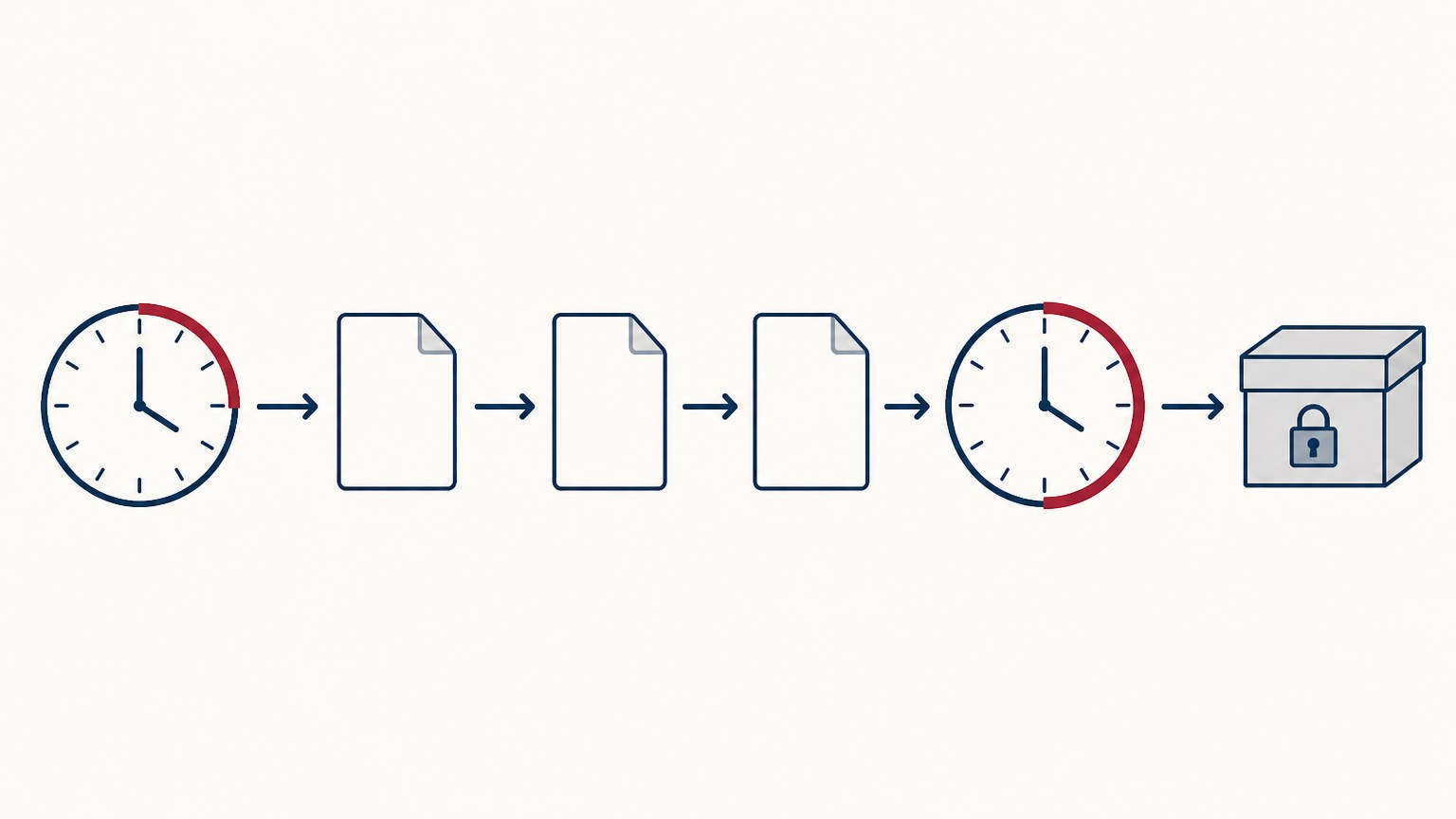
The firearm terms start the same day. Item 8 of the CR-160 bars you from owning, possessing, buying or trying to buy, or receiving any firearm, firearm part or ammunition while the order is in effect, unless the court grants a limited work-only exception (form CR-850). Firearm parts means receivers, frames and any item that may be used as or easily turned into one. The same item sets two deadlines, and the second exists to prove the first.
| What the order requires | The clock | Source |
|---|---|---|
| Turn in to local law enforcement, or sell to or store with a licensed gun dealer, every firearm, firearm part and round of ammunition you own or control | 24 hours from receiving the order | CR-160 item 8b; Penal Code 136.2(d)(2); Code Civ. Proc. 527.9(b) |
| File a receipt with the court showing that it was done (form CR-800 may be used) | 48 hours from receiving the order | CR-160 items 8c and 8d; Code Civ. Proc. 527.9(b) |
| Attend a review hearing if the court sets one, or risk a finding that you violated the order | Date set by the judge | CR-160 item 9b |
| Do not own or possess body armor, and relinquish any you have | While the order is in effect | CR-160 item 11 |
| Electronic monitoring, if ordered and authorized by the county | Not more than 1 year | Penal Code 136.2(a)(1)(G)(iv); CR-160 item 19 |
Section 136.2(a)(1)(G)(ii) adds a rule that surprises defendants. If the court does not issue a no-contact order in a domestic violence case, it must still consider issuing a protective order that carries only the firearm prohibition and the relinquishment requirement. There is a separate Judicial Council form for that, CR-162, the order to surrender firearms, firearm parts and ammunition in a domestic violence case. A judge can decide the contact question one way and the firearm question another.
The California Department of Justice reported that as of January 1, 2026, 4,794 of the 27,199 armed and prohibited persons in its Armed and Prohibited Persons System (17.6%) were prohibited because of a protection or restraining order, a category that includes domestic violence restraining orders, emergency protective orders and criminal protective orders. The report's appendix lists a criminal protective order under Penal Code section 136.2 among those orders, and protection and restraining orders accounted for 61.9% of the armed and prohibited individuals added to the system during 2025 (California DOJ, Armed and Prohibited Persons System Report 2025).
When the protected person wants contact
The person named in the order calls, or texts, or asks you to come home. It is natural to think their invitation ends the problem. It does not.
The instructions to law enforcement printed on the CR-160 say it directly: even if the protected person invites or consents to contact, the orders remain in effect and must be enforced, the protected person cannot be arrested for inviting it, and the orders can be changed only by another court order, citing Penal Code section 13710(b). The restrained person is the only one who can be charged. Our domestic violence defense page covers what the first week after an arrest looks like.
The lawful route is to ask the court. A pretrial order stays in effect until further court order, and the court terminates it on Judicial Council form CR-165. A defendant can ask the judge to modify the order, for example to allow peaceful contact around a child exchange or to change a distance. That request has to be prepared and supported; nothing changes because both people agree.
Which order wins when there is more than one
Some people end up with a family court order, a criminal protective order and an emergency protective order, all covering the same two people. The CR-160 lists the enforcement priority, and Penal Code section 136.2(e)(2) sets the rule for domestic violence and certain sex-offense charges: except as described in subdivision (c), the criminal court's order takes precedence over a civil court order against the same defendant.

The practical consequence is for parents. A family court order may say you can exchange children on Fridays. If it was made after a criminal protective order, section 136.2(e)(3) requires it to refer to the criminal order and, unless an emergency protective order or a Family Code 6320 no-contact order has precedence, acknowledge that an appropriate criminal protective order is enforced first. The safe exchange exception in item 17 of the CR-160 is the route the form itself provides, and section 136.2(f)(1) says a family or juvenile court order that permits contact with the children must provide for safe exchange and must not contain language that violates a criminal court no-contact order.
How long a criminal protective order lasts
Duration depends on when in the case the order is made. The answer is in the Judicial Council's own instructions on the CR-160 and in section 136.2(i).
| Order type | Statute | How long it can last |
|---|---|---|
| Pretrial order | Penal Code 136.2(a) | Until further court order, and only while the court has jurisdiction over the case; not valid after a county jail or state prison commitment is imposed |
| Post-conviction order, domestic violence and other listed offenses | Penal Code 136.2(i)(1) | Up to 10 years, as determined by the court |
| Post-conviction order for corporal injury of a spouse or partner | Penal Code 273.5(j) | Up to 15 years |
| Probation condition order | Penal Code 1203.097(a)(2) | As long as the defendant is on probation |
Two things follow. A pretrial order does not expire on a fixed calendar date. It is valid only while the court has jurisdiction over the case and is not valid after a jail or prison commitment is imposed, according to the Judicial Council's law enforcement instructions, which cite People v. Stone (2004) 123 Cal.App.4th 153. And a conviction can turn a temporary order into one measured in years. Under section 136.2(i)(1) the court at sentencing must consider a no-contact order of up to 10 years, whether or not the defendant goes to prison or jail or is placed on probation, and the sentencing court in the county where it was issued can modify it during that time. If your charge is corporal injury, our page on Penal Code 273.5 covers the offense and the 15-year post-conviction order under subdivision (j).
What breaking the order costs
The order carries its own criminal exposure, separate from the charge that produced it. The penalties are set out in the statute.
| Conduct | Charge | Exposure |
|---|---|---|
| Willful and knowing violation of a section 136.2 order | Contempt, misdemeanor, Penal Code 166(c)(1)(A) | Up to 1 year in county jail, a fine of up to $1,000, or both |
| Violation that results in physical injury | Penal Code 166(c)(2) | At least 48 hours in county jail, whether a fine or imprisonment is imposed or the sentence is suspended |
| Second or later conviction within 7 years, involving violence or a credible threat | Penal Code 166(c)(4) | County jail up to 1 year, or state prison for 16 months, 2 years or 3 years |
| Owning or possessing a firearm while prohibited by the order | Penal Code 29825(b) | Up to 1 year in county jail, a fine of up to $1,000, or both |
| Buying or receiving, or trying to, a firearm while prohibited | Penal Code 29825(a) | County jail up to 1 year or state prison, a fine of up to $1,000, or both |
Section 136.2(b) also allows a violation to be punished as a substantive offense under section 136.1, the witness intimidation statute, or as contempt, and provides that a contempt finding does not bar a section 136.1 prosecution, while a conviction or acquittal on the section 136.1 offense bars later contempt punishment for the same act. If your order is not a section 136.2 order, for example a family court order, the statute that can apply is Penal Code 273.6, which covers violations of protective orders defined in the Family Code and of civil orders under the Code of Civil Procedure, and carries its own one-year, $1,000 misdemeanor ceiling absent injury. The text of Penal Code 166 names section 136.2 orders directly.
The form also warns that it is a felony to take or hide a child in violation of the order, and that traveling across state or tribal boundaries with the intent to violate it may be punishable as a federal offense under 18 U.S.C. section 2261(a)(1). The form's certificate says the order is entitled to enforcement in every state, the District of Columbia, tribal lands and the territories, so moving to another state does not put you outside it.
If you have just received one in Los Angeles
The order is already in force, so the first hours are about compliance, not argument.
- Get the paper and read every checked box. Note the yard number in item 16, which places are checked, whether item 17 applies to your children, and the date of the next hearing.
- Deal with firearms inside 24 hours. Use a licensed dealer or local law enforcement, get a written receipt, and file it with the court inside 48 hours. If the court set a review hearing under item 9b, it is not optional.
- Route every message through your lawyer or through nobody. Item 15 allows contact through an attorney under the court's restrictions. It does not allow contact through a friend or a family member.
- Do not go back to the shared address on your own. Arrange a civil standby or ask for a modification instead.
- Prepare the modification request. Housing, children and work are the usual grounds. The request is decided on the facts and the judge's view of the risk, and nothing about it is automatic.
If you were arrested on the domestic violence charge itself, our overview of domestic violence defense in Los Angeles explains what the first week looks like. The Law Office of Aaron P. McAllister is a criminal defense practice at 3415 S Sepulveda Blvd, Suite 1100, Los Angeles, serving Los Angeles, Orange and Riverside counties. The first conversation is free, confidential, and with Aaron, not an intake service; the line is answered 24/7 at (310) 881-2786. You can request a confidential case review here.
Frequently asked questions
What is a criminal protective order in California?
A criminal protective order is a court order issued in a criminal case, for example under Penal Code section 136.2, that restricts a defendant's contact with an alleged victim or witness while the case is pending. It can include no-contact and stay-away terms, a ban on harassment, and a firearm prohibition, and it stays in effect until the court changes it.
What is the difference between a criminal protective order and a restraining order?
A criminal protective order is issued by the criminal court as part of the case, on a good cause belief that harm or intimidation has occurred or is likely, and the protected person does not have to ask for it. A restraining order is a civil order that the other person requests from a civil or family court. Both can exist at once, and a criminal order in a domestic violence case takes precedence over a civil order under section 136.2(e)(2), except where subdivision (c) gives an emergency or Family Code 6320 no-contact order precedence.
Can the victim cancel a criminal protective order?
No. The Judicial Council's instructions on form CR-160 say that even if the protected person invites or consents to contact, the order remains in effect and must be enforced, and that it can be changed only by another court order. The person the order restrains can be charged for the contact, and the protected person cannot be arrested for inviting it.
How long does a criminal protective order last in California?
A pretrial order lasts until further court order and only while the court has jurisdiction over the case. After a conviction, an order under section 136.2(i)(1) can last up to 10 years, and an order under Penal Code 273.5(j) can last up to 15 years. A probation condition order lasts as long as the defendant is on probation.
What happens if I violate a criminal protective order?
A willful and knowing violation of a section 136.2 order is contempt of court under Penal Code 166(c)(1), a misdemeanor punishable by up to one year in county jail, a fine of up to $1,000, or both. A violation that causes physical injury carries a minimum of 48 hours in jail, and repeat violations involving violence can be punished by county jail or state prison.
Can I see my children under a criminal protective order?
Only as far as the order allows. Item 17 of form CR-160 permits peaceful contact for the safe exchange of children and for court-ordered visitation, but only as stated in a specific family, juvenile or probate court order. A family court order made after a criminal protective order must refer to it and, unless an emergency protective order or a Family Code 6320 no-contact order has precedence, acknowledge that an appropriate criminal protective order is enforced first.
Do I have to give up my guns under a criminal protective order?
Yes, if the order includes the firearm prohibition. Form CR-160 requires you to turn in to local law enforcement, or sell to or store with a licensed dealer, all firearms, firearm parts and ammunition within 24 hours of receiving the order, and to file a receipt with the court within 48 hours. Possessing a firearm while prohibited is punishable under Penal Code 29825.
Sources: California Penal Code sections 136.1, 136.2 (as amended by Stats. 2024, ch. 538), 166, 273.5, 273.6, 1203.097 and 29825; Judicial Council forms CR-160 (Criminal Protective Order, Domestic Violence), CR-162 and CR-165, including CR-160, Rev. January 1, 2026; California Department of Justice, Armed and Prohibited Persons System Report 2025.
Law Office of Aaron P. McAllister. Aaron P. McAllister, Esq., responsible attorney. 3415 S Sepulveda Blvd, Suite 1100, Los Angeles, CA 90034. Attorney advertising. This page is general information about California law, not legal advice. Past results do not guarantee a similar outcome; every case turns on its own facts. Submitting information through this website does not create an attorney-client relationship. Law stated as of September 30, 2026.